

Most teen boys want to look a little stronger, stand a little taller, and feel good when they look in the mirror. I wanted that too, but I wasn’t sure where to start.
One day, I picked up a pair of small dumbbells at my uncle’s home and tried a random workout video. My arms hurt like crazy, but for the first time, I felt charged up.
And, since then, I’ve tried everything: gym, calisthenics, cleaning up my diet, sleeping better, and whatnot.
Of course, I made plenty of mistakes along the way. But the real progress came from showing up again the next day, and the day after that.
Yes, I’m still a teen, figuring things out. But this fitness guide has the exact workouts, habits, and diet changes that worked for me. So, if you’re ready to invest in the person you’re becoming, let’s do it together.
Step 0: Get Your Head In The Game (Day 1-7)
For the first seven days, try to find your routine and detox. Figure out how you’ll fit workouts into your daily life. Your job this week? Show up.
For record:
- Sleep at least 8 hours. Less than that and your muscles won’t recover properly, no matter how good your workouts are.
- Wake up at the same time every day – could be 5 AM, could be noon. Pick a time and stick to it.
- Go No-Screen for the first hour after waking up (and the last hour before bed). It will feel brutal at first, but trust me, it’s important. Let your body wake up or wind down naturally. You can read something, stretch, or stare at the ceiling. Just don’t grab the phone the first thing in the morning.
- Have at least one protein-heavy meal. I would recommend doing so at breakfast. Grab whatever—eggs, Greek yoghurt, peanut butter toast, protein shake, etc. It will keep you full, kickstart your metabolism, and set the tone for the rest of the day.
- Hit 8-10k steps. Walk, walk, walk as much as possible. Take the stairs. Pace while you’re on the phone. Do laps around your room if you have to. Just move.
- Drink 3-4 liters of water daily. If possible, buy a 2L sipper and carry it everywhere.
- Pick a T-shirt, shorts, a towel, or whatever you have, and reserve them for your workouts. No need to buy anything new. Just keep them ready and separate so your body knows it’s time to train.
- Cut out one junk food habit. Don’t try to fix your entire diet this week. Just drop one bad habit – it could be soda, late-night snacking, or sweets. Pick one and replace it with something better, like fruits, nuts, water, or anything.
- Make a detox water every night before bed. It’s easy: Fill a bottle with water, then toss in some lemon slices, cucumber, or mint. Keep it in the fridge. Drink it first thing when you wake up. It flushes out your system and honestly just makes you feel cleaner.
Most important: Keep track of your activities. Track what time you woke up, whether you drank enough water, and if you hit your steps.
By day 7, these habits should feel normal (if they don’t, try another week). Once that happens, add these workouts to your mix.
Full-Body Home Workout Routine
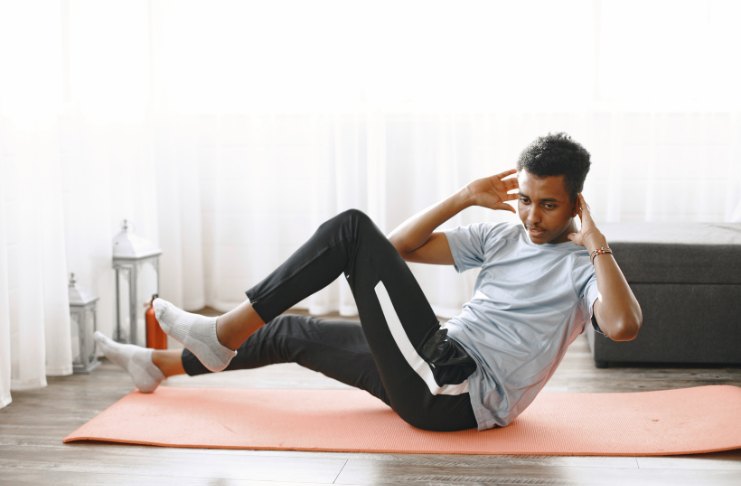
Below are the exercises that helped me build a strong, athletic, and balanced physique. (I won’t claim they alone are the drivers, but they definitely laid the foundation)
But here’s the thing: you don’t have to do everything perfectly right away. Some exercises may feel impossible at first, and that’s completely normal. It took me months to actually get hold of these.
Before You Start: The 5-Minute Warm-Up (NON-NEGOTIABLE)
Cold muscles tear easily, and YOU DON’T WANT THAT. So, do this before every single workout:
- Arm Circles – 20 forward, 20 backward
- Leg Swings – 10 each leg (front to back, then side to side)
- Torso Twists – 20 total
- Jumping Jacks – 30 reps
- Bodyweight Squats – 10 reps (slow and controlled)
- Push-up Position Hold – 20 seconds
Your body should feel warm and loose. If not, do another round.
Pain vs. Discomfort: Know the Difference
- Good discomfort: Muscle burn, feeling tired, soreness the next day
- Bad pain: Sharp pain, joint pain, pain that makes you wince or changes your form
If something hurts, STOP. Don’t push through joint pain or sharp pains. Rest, ice it, and if it persists, see a doctor.
How to Use This Plan?
- Start where you can. If you can’t do a full pushup, start on your knees or against a wall.
- Can’t do a pull-up yet? Use a chair to assist, or try inverted rows under a table.
- Three sets (12 reps) per exercise is a guideline. Even 1–2 sets is fine if that’s all you can do.
- Rest 60–90 seconds between sets. Focus on form, not speed.
- Track your progress every week and gradually increase reps, sets, or difficulty.
The Exercises (With Form Cues)
| Muscle Group | Exercise | How To Do It | Beginner Alternative |
|---|---|---|---|
| CHEST | Regular Pushups | Hands shoulder-width, body straight, lower chest to floor | Wall Pushups or Knee Pushups |
| Decline Pushups | Feet on chair/bed, hands on floor, pushup | Master regular pushups first | |
| Wide Pushups | Hands 6 inches wider than shoulders, pushup | Incline Pushups (hands on chair) | |
| BACK | Inverted Rows | Lie under table, grab edge, pull chest to table | Bent-Over Rows with backpack |
| Superman Holds | Lie face down, lift arms and legs off floor, hold 3-5 sec | Lift only chest, keep legs down | |
| Pull-Ups (doorframe bar) | Hang, pull chin over bar, lower slowly | Chair-Assisted Pull-Ups or skip if no bar | |
| SHOULDERS | Pike Pushups | Downward dog position, lower head between hands | Wall Pike Pushups (feet on wall) |
| Lateral Raises | Water bottles at sides, raise to shoulder height | Use lighter bottles or no weight | |
| Front Raises | Water bottles in front, raise forward to eye level | Alternate arms, lighter weight | |
| BICEPS | Backpack Curls | Hold loaded backpack, curl from thighs to shoulders | Use lighter load (2–3 books) |
| Towel Curls | Loop towel under one foot, stand on it, curl both ends | Single arm, less resistance | |
| Isometric Door Pull | Stand in doorframe, pull on frame, hold 10 sec | Adjust intensity by how hard you pull | |
| TRICEPS | Diamond Pushups | Hands together forming diamond, pushup | Knee Diamond Pushups |
| Chair Dips | Hands on chair behind you, dip down to 90° | Bend knees, feet close to chair | |
| Elevated Bench Dips | Hands on chair, feet on another chair, dip | Use just one chair, feet on floor | |
| LEGS | Bodyweight Squats | Feet shoulder-width, squat to parallel | Hold chair for balance |
| Bulgarian Split Squats | Back foot on chair, front leg squats | Reduce depth, hold wall | |
| Lunges | Step forward, lower back knee to floor | Stationary lunges (no walking) | |
| Single-Leg Calf Raises | Stand on one leg, rise on toes | Two-leg calf raises | |
| HAMSTRINGS | Single-Leg Glute Bridges | Lie down, one foot planted, lift hips | Two-leg glute bridges |
| Nordic Curls | Knees down, someone holds ankles, lower forward | Use hands to catch yourself | |
| Romanian Deadlift with Backpack | Hold backpack, hinge at hips, lower down | Bodyweight Romanian deadlift | |
| ABS | Crunches | Lie down, lift shoulders off ground | Hands on thighs instead of behind the head |
| Leg Raises | Lie flat, lift straight legs to 90°, lower | Bent-knee raises | |
| Plank | Forearms down, body straight, hold 30–60 sec | Knee plank | |
| Bicycle Crunches | Alternating elbow to opposite knee | Go slower, focus on form | |
| Mountain Climbers | Plank position, drive knees to chest alternating | Go slow, don’t jump | |
| FOREARMS | Backpack Holds | Hold loaded backpack at sides, hold 30–60 sec | Use lighter weight |
| Wrist Curls | Water bottle, forearm on thigh, curl wrist up/down | Single arm focus |
Your Weekly Split
| Day | Muscle Focus |
|---|---|
| Monday | Upper Body (Chest, Back, Shoulders, Biceps, Triceps) |
| Tuesday | Lower Body + Core (Legs, Abs, Neck optional) |
| Wednesday | Rest |
| Thursday | Upper Body |
| Friday | Lower Body + Core |
| Saturday | Rest |
| Sunday | Rest |
On Upper Body days: Pick 2 chest exercises, 2 back exercises, 1 shoulder, 1 bicep, 1 tricep. Do 3 sets of 8-12 reps each.
On Lower Body days: Do both leg exercises, all 3 ab exercises, and optional forearm/neck work. 3 sets of 12-15 reps for legs, 3 sets of 15-20 for abs.
Even on rest days, be active. Walk that extra mile.
Progression Plan
You can’t do the same workout forever and expect to keep improving. Here’s how to progress:
Weeks 1-2:
- Focus entirely on form
- Use easier variations
- Don’t worry about reps/sets, just get the movements right
- If something feels wrong, stop and adjust
Weeks 3-4:
- Aim for 3 sets of 8 reps (even if you have to use easier variations)
- Rest 90 seconds between sets
- Track your numbers
Weeks 5-8:
Each week, try to add:
- 1-2 more reps per set, OR
- Add a 4th set, OR
- Move to a harder variation (knee pushups → regular pushups)
Pick ONE of these per exercise, not all three at once.
Weeks 9-12:
- Aim for 3-4 sets of 12-15 reps
- Slow down your reps (3 seconds down, 1 second up)
- Add pauses at the hardest point
- Graduate to advanced variations (regular pushups → decline pushups)
After Week 12:
Once you can do 4 sets of 15 reps with good form, you’ve outgrown the beginner phase. At this point:
- Add resistance (weighted backpack, resistance bands, dumbbells)
- Try advanced variations (archer pushups, pistol squats, L-sit pull-ups)
- Or consider joining a gym for access to more equipment
What to Expect
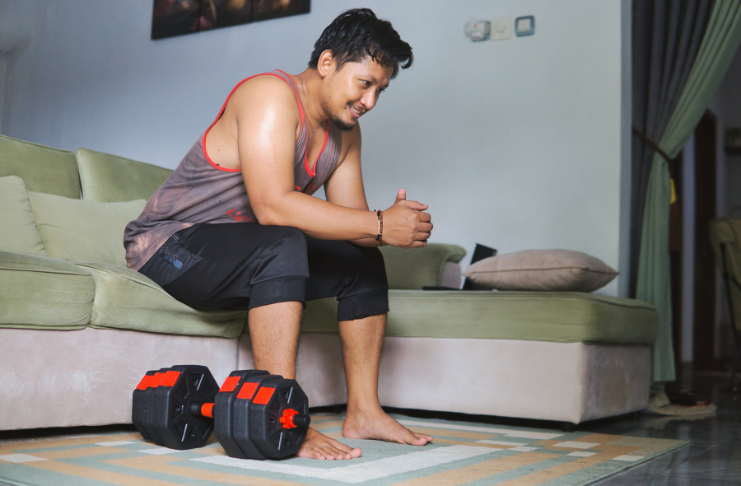
Week 1-2: You’ll be sore. Really sore. This is normal. You won’t see any physical changes yet, but you’ll feel more energized.
Week 3-4: Soreness decreases. You’ll notice you can do a few more reps. Maybe you see a tiny bit more definition. Don’t expect much yet.
Week 6-8: This is where things become interesting. You’ll feel stronger. Shirts might fit a bit tighter in the arms/chest. You’ll feel more energized throughout the day.
Week 10-12: Visible changes. People might start commenting. You’ll definitely notice muscle growth and fat loss (if your diet is on point).
Important: Results will vary based on:
- How consistent are you
- What you eat (you can’t out-train a bad diet)
- Your genetics (some people build muscle faster)
- Your sleep (this is when you actually grow)
Don’t compare your Week 4 to someone else’s Week 12. Stay in your own lane.
Troubleshooting Through the Excuses
“I missed a week. Did I lose all my progress?” No. Jump back in. You might be a bit sore again, but your strength comes back fast. Don’t use one missed week as an excuse to quit.
“I can’t do a single pull-up.” Most people can’t at first. Do inverted rows under a table for 4-6 weeks, then try assisted pull-ups with a chair. You’ll get there.
“My [joint] hurts during [exercise].” Stop that exercise immediately. Try a different variation. If pain persists, see a doctor. Never push through joint pain.
“I’m not seeing results.” Check these:
- Are you actually adding reps/weight each week?
- Is your diet clean? (Like seriously?)
- Are you sleeping 8+ hours?
- Are you doing a full range of motion or half-repping?
“I’m too tired to work out.” Do it anyway. Even a 50% effort is better than zero. Once you start, the energy usually comes. But if you’re exhausted for multiple days, you might need an extra rest day.
Closing Note
Some days you’ll feel like a beast. Other days, it’ll take everything just to get through five push-ups. Both days matter.
Show up. Stay real. Be kind to your body.
You’re not doing this to compete or impress anyone. You’re doing this for your energy, your posture, your mood, and your future. And I’ll be right here with you, every rep of the way. Let’s get it, fam.
Important: Be honest with yourself. These workouts won’t do much if you’re eating garbage all day. What you put on your plate matters just as much as what you do in your workout.
Eat clean, stay hydrated, and sleep like your body depends on it – because it does.


![Fitness Guide For Teens: Home Workouts, Diet, and Habits That Actually Work [For Boys]](https://khlur.in/wp-content/uploads/2025/10/Fitness-Guide-for-Teen-Boys.png)
Leave a Reply